
 Trav Blog
Why it’s time to ditch your travel spreadsheet
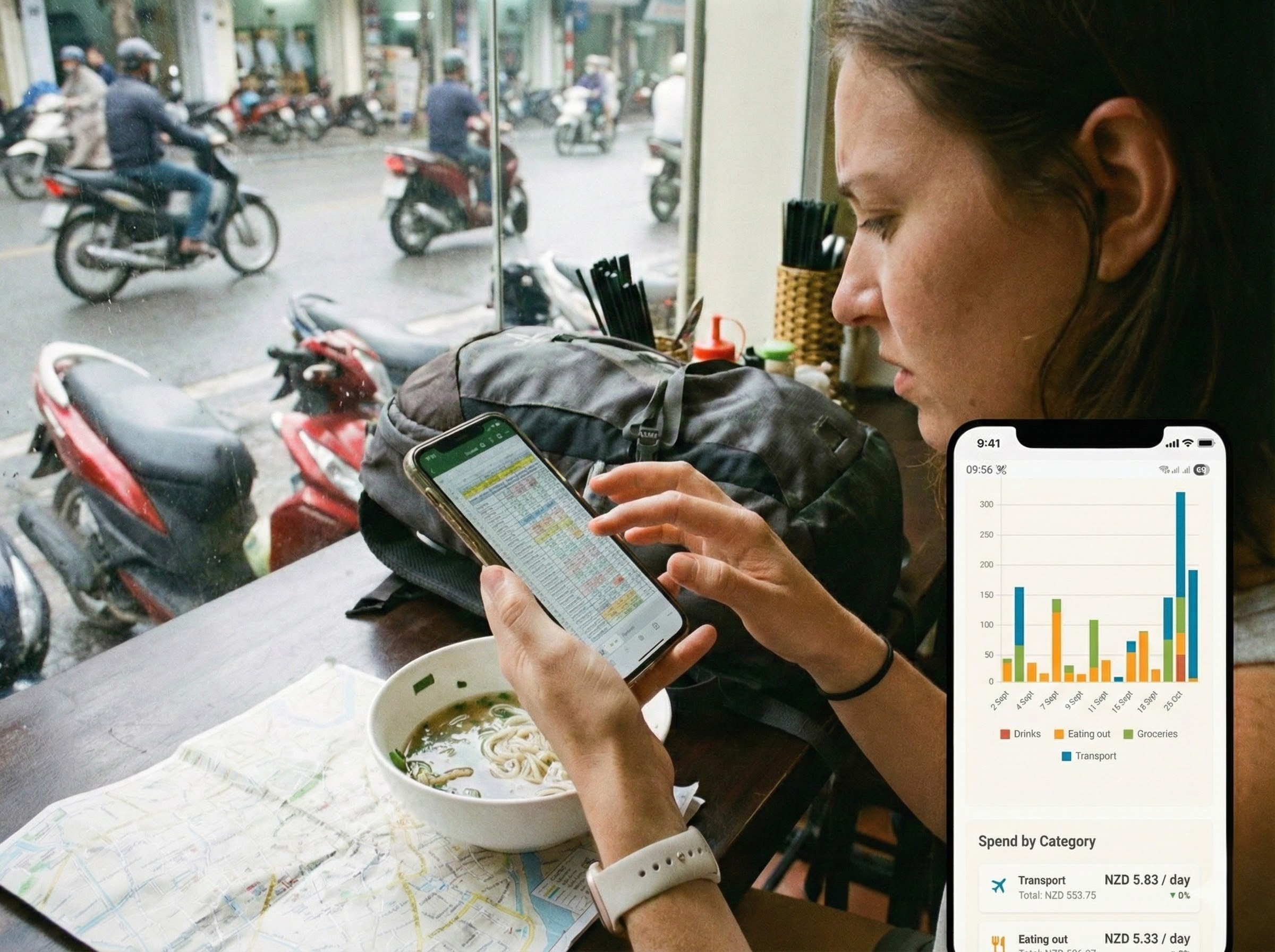
We need to talk about your spreadsheet. You know the one. It’s color-coded, meticulously formulated, and possibly the most beautiful thing you created before your trip. It houses your flight confirmation codes, your daily budget breakdown, and a complex pivot table predicting the cost of coffee in three different currencies.
For the organized traveler, the spreadsheet is a security blanket. It promises control in the chaotic world of travel. But there is a distinct difference between planning a trip from the comfort of a desktop monitor and managing one from the back of a tuk-tuk.
The reality of travel is messy, spontaneous, and often unconnected. And that is exactly where the spreadsheet fails. Here is why it is time to close the tab and upgrade your toolkit.
The ‘fat finger’ problem
Spreadsheets were designed for mice and keyboards, not thumbs and touchscreens. Trying to input a cash expense into Cell G42 while balancing a backpack and a street food snack is a recipe for frustration.
On a mobile screen, your expansive budget tracker becomes a microscopic grid. You pinch to zoom, you accidentally drag a column, you type "3000" instead of "300" because of the sun glare. Suddenly, your formulas break, and you are spending your evening debugging a Google Sheet instead of enjoying a sunset.
The Fix: Travel tools should be "fat finger" friendly. You need an interface designed for one-handed use, with large buttons and intuitive inputs that don’t require surgical precision.
Offline anxiety
The cloud is brilliant - until it isn't. We have all been there: standing at a hotel check-in desk or a remote train station, watching the loading bar crawl across the screen because the local signal is non-existent.
If your budget and travel documents live exclusively in a cloud-based sheet, you are tethered to a data connection. Losing signal means losing access to your plans. This creates a low-level hum of anxiety that travels with you: Will it load? Do I have the screenshot?
The Fix: Your financial brain needs to work offline. Data should be stored locally on your device first and synced later. This ensures that whether you are in a basement jazz bar in Tokyo or a hiking trail in the Andes, your budget is live and accessible.
The Trav solution: Automation over admin
The biggest flaw of the spreadsheet is that it demands you be the administrator. You have to look up the exchange rate. You have to categorize the expense. You have to manually deduct it from your total.
Trav replaces this manual labor with automation. When you enter an expense in the app, it doesn't just record a number. It automatically detects your location and applies the real-time currency conversion. It subtracts the amount from your specific category budget (like "Food" or "Transport") and updates your daily allowance instantly.
It transforms "data entry" into a simple tap. This encourages better habits; because it is easy to do, you are more likely to track the small things - that extra gelato or the taxi tip - that often slip through the cracks of a spreadsheet.
Visualizing data (and reality)
Rows of numbers are abstract; they don't trigger an emotional response until you do the math. A list of expenses might not look alarming, but a pie chart showing that 60% of your budget has gone to "Entertainment" in the first three days is a clear, immediate wake-up call.
Trav visualizes your spending in real-time. But more importantly, it offers a psychological edge with the "Safe to Spend" feature (available in Trav Plus). Instead of just seeing what you have spent, the app calculates what you have left for the day to stay on track.
It shifts the mindset from accounting ("I spent $50") to decision making ("I have $30 left for dinner").
The bottom line
Spreadsheets are excellent for planning a trip - for comparing flight prices or mapping out an itinerary weeks in advance. But for living the trip, they are a burden.
Travel is about immersion, not administration. By switching to a dedicated tool, you remove the friction between spending money and tracking it. You gain the confidence of knowing exactly where you stand financially, without the need for a mouse, a keyboard, or a strong Wi-Fi signal.
Ready to travel smarter? Pack Trav for free and leave the rows and columns at home.
Travel admin sorted: Why you need a digital backpack
Having 'everything in one place' means nothing if you can’t instantly extract what you need. A folder of 50 PDFs isn't a system. It’s just a searchable mess.

Off the grid, on the money: managing money when there’s no WiFi
Don't let dead zones break your budget. Learn why Trav is the ultimate offline-first app for logging expenses and converting currency anywhere in the world.
‘Safe to spend’: How to make your budget last until the airport
Is your travel budget on track? See how the safe to spend feature automatically adjusts your daily limit so you never run short.